

About Mobile Care
What Is Mobile Wound Care? Benefits of Treatment at Home
How specialist wound care that comes to you works, who it helps most, and what to expect from your first visit.
For many people living with a chronic wound, the hardest part of treatment isn’t the wound itself. It’s getting to the appointments. Arranging rides, navigating parking lots with a walker, sitting in waiting rooms and then repeating the trip every week can be exhausting, painful and, for some, simply impossible. When appointments get missed, wounds heal more slowly, and the risk of infection and hospitalization rises.
Mobile wound care solves that problem by bringing the specialist to the patient. Instead of traveling to a clinic, patients receive expert assessment and treatment wherever they live: at home, in a nursing home or in an assisted living community. This guide explains how mobile wound care works, who benefits most, what happens during a visit and how to get started.
Key Takeaways
- Mobile wound care brings trained wound clinicians to the patient’s home or care facility.
- It’s especially helpful for people with limited mobility, transportation challenges or chronic health conditions.
- Treatments like advanced dressings, debridement and compression therapy can often be provided on site.
- Mobile teams coordinate closely with your primary care doctor and specialists.
- Many insurance plans, including Medicare, may cover medically necessary wound care. Always verify your benefits.
In This Article
What Is Mobile Wound Care?
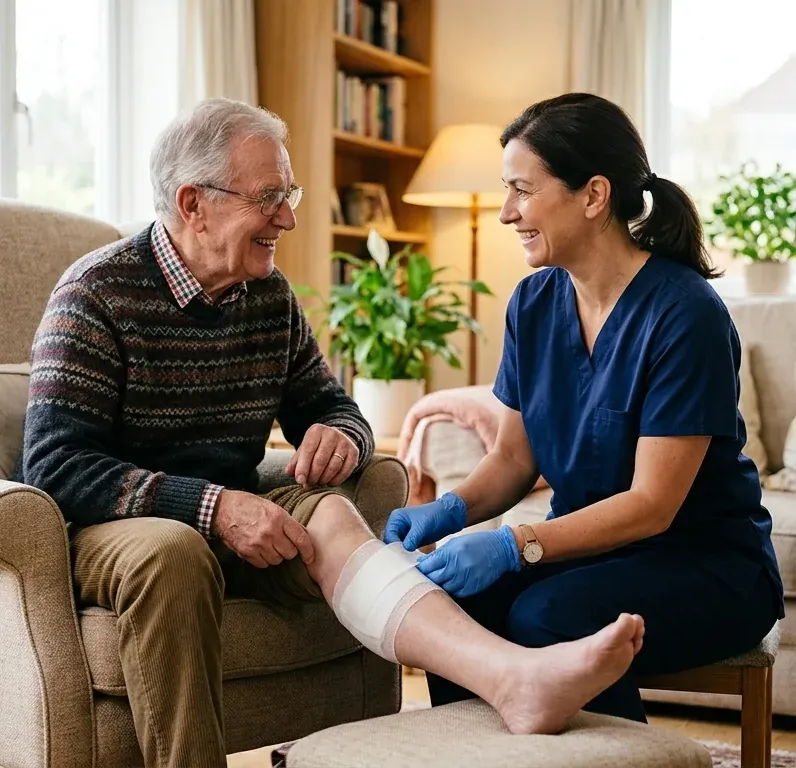
Mobile wound care is specialized wound treatment delivered at the patient’s location by a team of trained clinicians. These can include physicians, nurse practitioners, registered nurses and certified wound care specialists. Rather than simply changing dressings, a mobile wound care team provides the same kind of expert assessment and treatment you’d expect at a wound clinic, adapted for the home setting.
A mobile wound care provider typically:
- Performs a full wound assessment, including measurements and photos to track progress
- Looks for underlying causes such as circulation problems, diabetes, pressure or poor nutrition
- Creates a personalized treatment plan
- Provides treatments and dressing changes on a regular schedule
- Teaches patients and caregivers how to care for the wound between visits
- Communicates with the patient’s doctors and, in facilities, the nursing staff
Who Benefits Most From Mobile Wound Care?
Mobile wound care can help anyone with a wound that needs specialized attention, but it’s especially valuable for:
01Homebound patients
People who can’t leave home without considerable effort because of illness, injury or frailty.
02Nursing home & assisted living residents
Residents receive specialist care on site, working alongside facility staff.
03People with limited mobility
Those who use wheelchairs or walkers, or who are bedbound, for whom travel is painful or risky.
04Patients without reliable transport
People who no longer drive or depend on family members’ schedules.
05People with chronic conditions
Those managing diabetes, heart disease or circulation problems that complicate healing.
06Recently discharged patients
People recovering at home after surgery or a hospital stay who need close wound monitoring.
Wounds Commonly Treated With Mobile Care
- Diabetic foot ulcers: see our diabetic foot care guide
- Pressure ulcers (bedsores): learn how to prevent bedsores
- Venous and arterial leg ulcers
- Surgical and post-operative wounds that are slow to heal
- Traumatic wounds and skin tears, especially on fragile skin
- Chronic, non-healing wounds that haven’t improved in four to six weeks
7 Benefits of Wound Care at Home
- No travel, no waiting roomsPatients avoid the physical strain and time of getting to appointments, and caregivers don’t need to take time off work to drive them.
- More consistent treatmentWhen care comes to you, missed appointments become far less common. Consistency is one of the most important factors in healing chronic wounds.
- Earlier detection of problemsRegular visits mean clinicians can spot early signs of infection or deterioration and adjust treatment quickly, before small problems become emergencies.
- Care that fits real lifeSeeing the patient’s home helps clinicians spot things that affect healing, such as the mattress, the chair they sit in all day, their shoes or how meals are prepared, and give practical advice.
- Lower risk of exposure to illnessStaying home avoids crowded waiting rooms, which matters for older adults and people with weakened immune systems.
- Hands-on education for familiesCaregivers can learn dressing changes and warning signs in their own environment, with the supplies they’ll actually use.
- Comfort and dignityBeing treated in familiar surroundings is less stressful, especially for people living with dementia, anxiety or chronic pain.
What to Expect During a Mobile Wound Care Visit
Your first visit
The first visit is usually the longest. Your clinician will review your medical history, medications and any recent hospital stays, then carefully examine and measure the wound. They’ll look for underlying factors like circulation, blood sugar, nutrition and pressure, and discuss your goals. Together, you’ll agree on a treatment plan and a visit schedule.
Follow-up visits
At each follow-up, the clinician checks progress, measures the wound, performs treatments or dressing changes and adjusts the plan as needed. Visit frequency depends on the wound. Some patients are seen several times a week at first, then less often as healing progresses.
Between visits
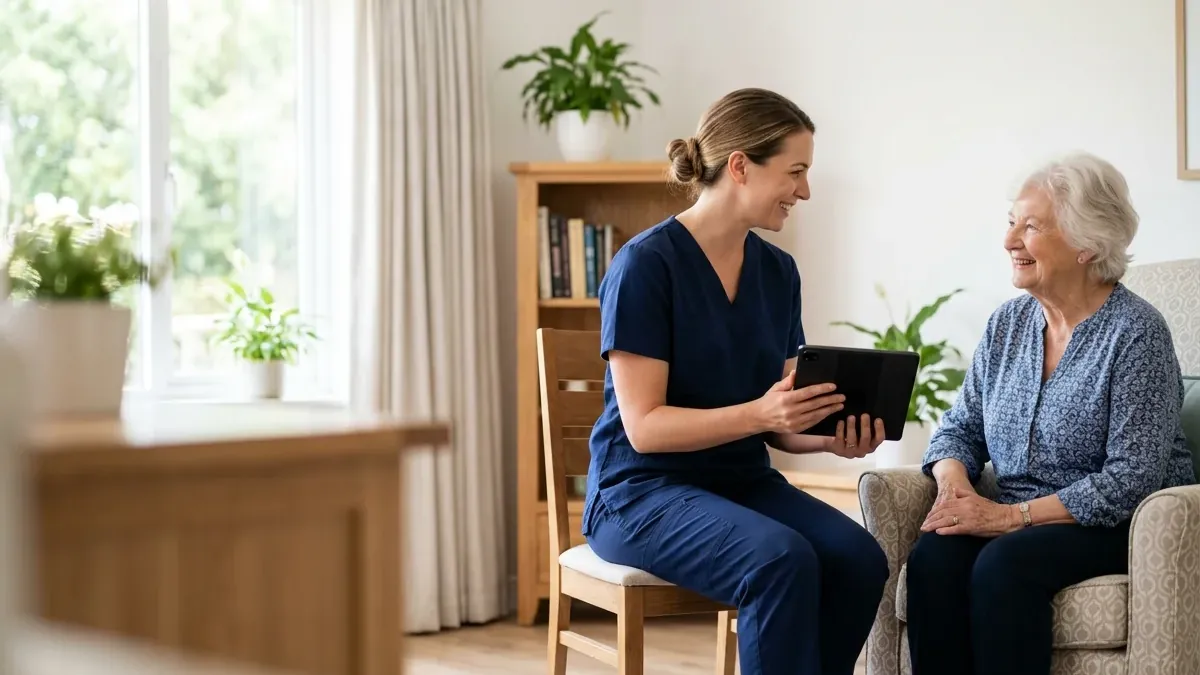
You’ll know exactly how to care for the wound, which warning signs to watch for and how to reach the team. Some providers also offer telehealth check-ins to answer questions and review progress between in-person visits.

Coordination with your care team
Mobile wound care doesn’t replace your primary care doctor. It works alongside them. Your wound care team shares updates with your physician and specialists, and in nursing homes and assisted living communities, works closely with facility nurses so everyone follows the same plan.
Mobile Wound Care vs. Traditional Clinic Visits
| Mobile wound care | Clinic visits | |
|---|---|---|
| Location | Home, nursing home or assisted living | Outpatient clinic or hospital |
| Travel | None for the patient | Transportation needed for every visit |
| Waiting time | Minimal | Waiting rooms are common |
| View of home environment | Clinician sees real-life factors affecting healing | Limited |
| Caregiver education | Hands-on, in the patient’s own setting | Usually verbal or printed instructions |
| Best suited for | Limited mobility, chronic wounds, facility residents | Patients who travel easily or need hospital-based procedures |
Some situations, such as certain surgical procedures, hyperbaric oxygen therapy or serious, rapidly spreading infections, may require hospital or clinic care. A good mobile wound care team will recognize when this is needed and help coordinate the referral.
Signs It’s Time to Seek Specialist Wound Care
Many minor cuts and scrapes heal well with simple first aid. But some wounds need specialist attention. Consider contacting a wound care provider if:
- A wound hasn’t shown clear improvement after two weeks, or hasn’t healed after four to six weeks
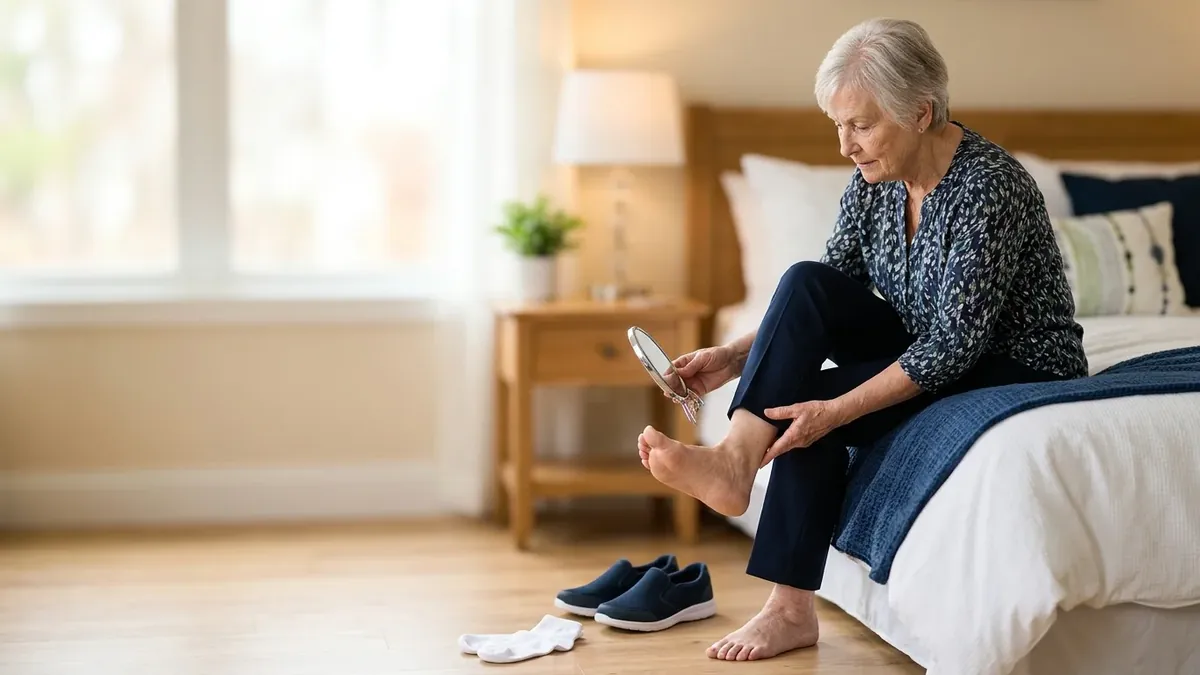
- The wound is on the foot or leg of someone with diabetes or poor circulation
- A bedsore or pressure injury has developed, even a small one
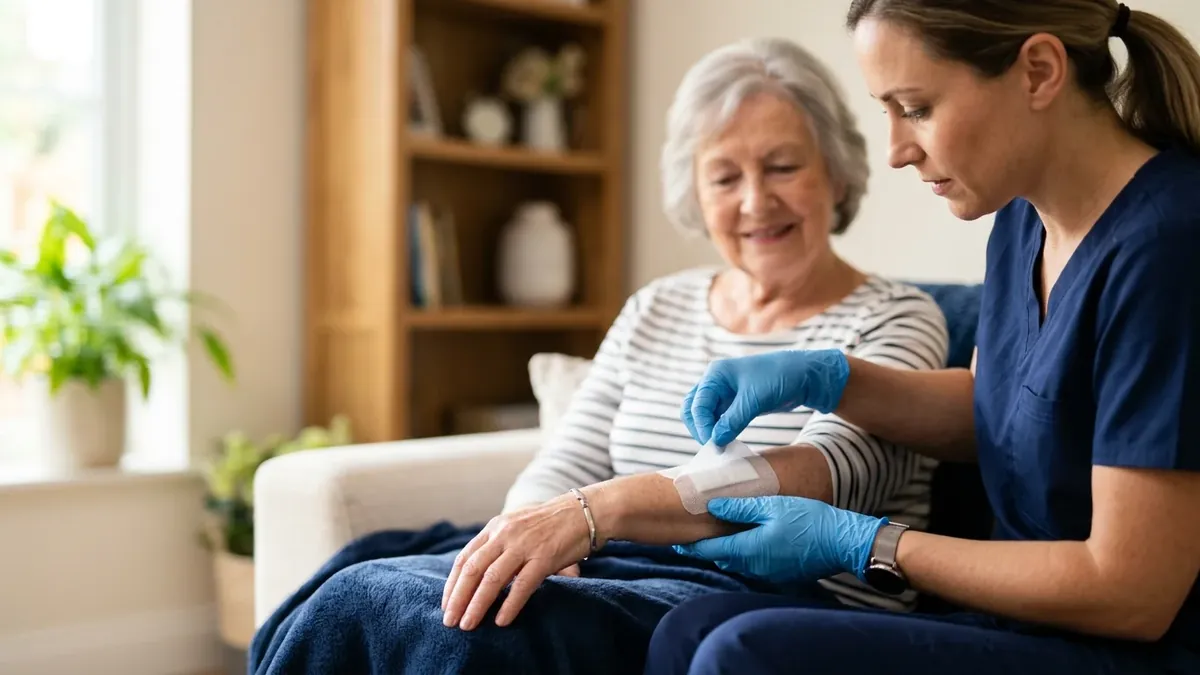
- A surgical incision has opened, is draining or shows signs of infection
- The wound keeps coming back in the same place
- Dressing changes are painful, complicated or difficult for the family to manage
- The person has recently been discharged from hospital with a wound that needs close monitoring
If you’re unsure, it’s always reasonable to ask. Our guide to the signs of wound infection can also help you judge how urgent a situation is.
How Mobile Wound Care Supports Families
Caring for a loved one with a chronic wound can be physically and emotionally demanding, especially when you’re also juggling work, children and your own health. Mobile wound care can ease that load in several ways:
01Less time off work
Family members no longer need to arrange time off to drive a loved one to frequent appointments.
02Confidence at home
Clinicians teach dressing changes and warning signs in person, so families know exactly what to do.
03A clear point of contact
Families know who to call with questions, and don’t have to piece together advice from different places.
04Peace of mind
Regular professional visits mean changes are caught early, even for family members who live far away.
Insurance and Coverage
Medically necessary wound care is covered by many insurance plans, including Medicare, Medicaid and many commercial plans. However, coverage details such as copays, visit limits and approved treatments depend on your specific plan and situation.
At Wound Care Solutions, we work with Medicare, Medicaid and most major Michigan health plans, and we’ll help verify your benefits before your first visit. See our full list of accepted insurance plans, or call us at 248-778-7552 and we’ll check for you.
How to Get Started With Mobile Wound Care
- Reach outCall, email or request a visit online. Physicians, nursing homes and assisted living facilities can refer patients directly.
- Share a few detailsWe’ll ask about the wound, the patient’s location, their doctor and their insurance, so we can prepare for the first visit.
- Assessment and care planA clinician visits, assesses the wound, coordinates with the patient’s doctor and creates a personalized treatment plan.
- Ongoing treatment and supportWe visit on a regular schedule, adjust care as the wound heals, and focus on prevention so wounds don’t come back.
Questions to ask any mobile wound care provider
- What training and credentials do your clinicians have?
- Which types of wounds and treatments do you provide at home?
- How often will visits be, and how do I reach you between visits?
- How do you communicate with my doctor or facility staff?
- Do you accept my insurance, and will you verify my benefits?
- Which areas do you serve?
Healing happens more easily when care fits around your life, not the other way around.
Frequently Asked Questions
What is mobile wound care?
Mobile wound care is specialized wound treatment provided by trained clinicians at the patient’s home, nursing home or assisted living facility, instead of at a clinic or hospital. It includes assessment, treatment, dressing changes, education and coordination with the patient’s doctors.
Who qualifies for mobile wound care?
Anyone with a wound that needs specialized care can benefit, but it’s especially helpful for people with limited mobility, no reliable transportation, chronic health conditions, or who live in nursing homes or assisted living. Insurance eligibility rules vary by plan, and your provider can help you check.
Does Medicare cover wound care at home?
Medicare may cover medically necessary wound care services, including care provided at home or in a facility, depending on the situation and the type of service. Coverage details vary, so it’s best to verify your benefits. Our team can help you check.
How often will a wound care clinician visit?
Visit frequency depends on the type and severity of the wound. Some patients are seen several times a week at first, with visits becoming less frequent as the wound heals. Your clinician will recommend a schedule as part of your care plan.
Do I need a referral from my doctor?
You can contact us directly to ask about care. Depending on your insurance and the treatments needed, a physician order may be required, and we can help coordinate with your doctor to arrange it.
Can mobile wound care be provided in a nursing home?
Yes. Mobile wound care teams regularly visit nursing homes and assisted living communities, treating residents on site and working alongside facility nurses and staff so that everyone follows the same care plan.
What areas does Wound Care Solutions serve?
We’re based in Troy, Michigan, and provide mobile wound care to patients across Metro Detroit. Call us at 248-778-7552 to confirm we serve your area.
Related Articles
 How to Prevent Bedsores in a Bedbound Loved One
 Diabetic Foot Care: Daily Habits That Prevent Ulcers
 7 Signs Your Wound Is Infected (and When to Call for Help)
Medical disclaimer: This article is for general educational purposes only and is not a substitute for professional medical advice, diagnosis or treatment. Always follow the instructions of your own healthcare provider. If you think you are experiencing a medical emergency, call 911 immediately.