

Home Care Guides
How to Change a Wound Dressing at Home: A Step-by-Step Guide
Everything patients and caregivers need to change a dressing safely, comfortably and with confidence.
Changing a wound dressing can feel intimidating the first time, especially if you’re caring for a parent, partner or yourself after surgery. You may worry about causing pain, introducing germs or doing something wrong. The good news is that with the right supplies, clean hands and a simple routine, most dressing changes can be done safely at home.
This guide explains why dressings matter, the supplies you’ll need, and a clear step-by-step process for removing an old dressing, cleaning the wound and applying a fresh one. It also covers the most common mistakes and the warning signs that mean it’s time to call your care team. Always follow the specific instructions your clinician has given you, since every wound is different, but use this guide to feel prepared and confident.
Key Takeaways
- Clean hands are the most important step. Wash for at least 20 seconds before and after.
- Gather every supply before you start so the wound isn’t left uncovered.
- Remove old dressings slowly and moisten any that stick, rather than pulling.
- Clean gently with the solution your clinician recommends, usually saline.
- Change the dressing as often as instructed, and any time it becomes wet, dirty or loose.
In This Article
Why the Right Dressing Makes a Difference
A wound dressing does much more than cover a wound. A well-chosen, properly applied dressing:
- Protects the wound from dirt, bacteria and friction.
- Maintains the right moisture balance. Most wounds heal best in a moist, but not wet, environment. Letting a wound dry out and scab can actually slow healing.
- Absorbs drainage so the surrounding skin doesn’t become soggy and break down.
- Reduces pain by cushioning the area and keeping nerve endings protected.
- Supports specific treatments, such as antimicrobial or compression therapy.
That’s why your clinician chooses a particular type of dressing for your wound and tells you how often to change it. Swapping to a different product, or changing it far more or less often than instructed, can undo that careful balance.
Supplies You’ll Need
Set everything out on a clean, dry surface before you begin. Having it all within reach means the wound isn’t left uncovered while you search for something.
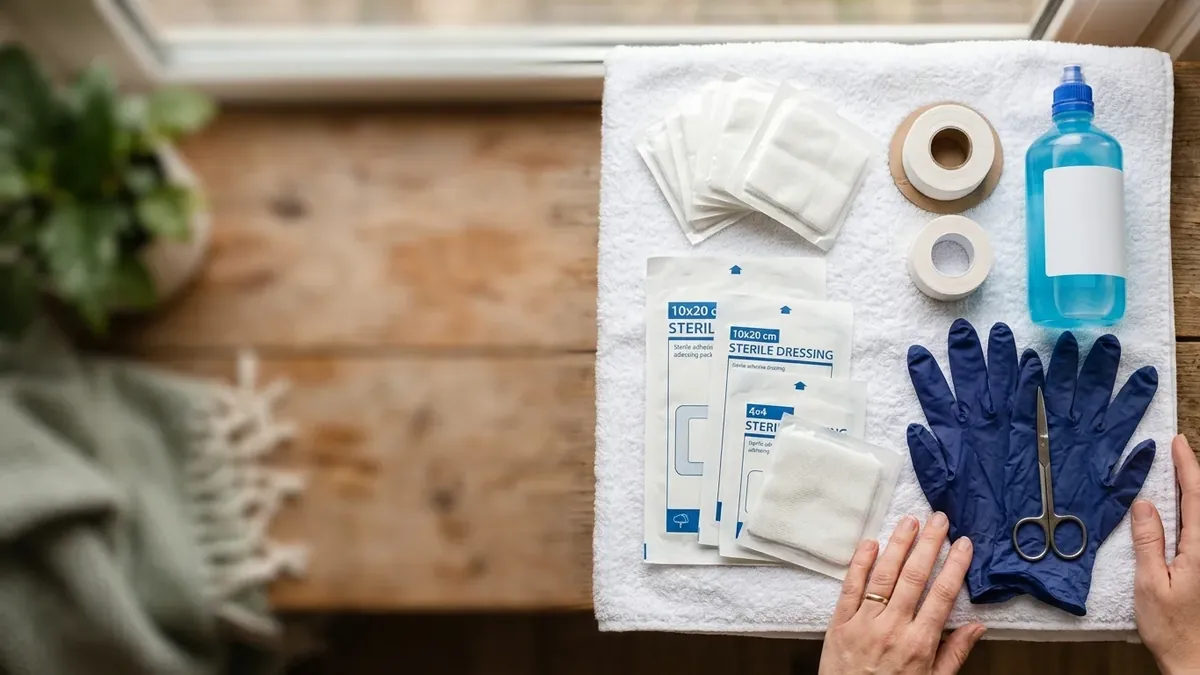
01Disposable gloves
Clean, single-use gloves. Use a fresh pair to apply the new dressing.
02Your new dressing
The exact type and size your clinician prescribed, still sealed in its packaging.
03Cleaning solution
Usually sterile saline, or whatever your care team recommends. Avoid harsh antiseptics unless instructed.
04Gauze pads
Sterile gauze for cleaning and gently patting the surrounding skin dry.
05Tape or wrap
Medical tape, a bandage roll or a securing wrap if your dressing isn’t self-adhesive.
06Scissors and a bag
Clean scissors kept only for wound care, plus a small plastic bag for the old dressing.
Before You Start
A few minutes of preparation makes the whole process smoother and more comfortable.
- Choose a well-lit, comfortable spot where the person can sit or lie with the wound easy to reach.
- Consider pain relief. If dressing changes are painful, ask your clinician whether it’s appropriate to take a pain reliever about 30 to 60 minutes beforehand.
- Explain what you’re doing if you’re caring for someone else. Knowing what comes next helps people relax.
- Check the dressing’s expiry date and make sure the packaging isn’t torn or wet.

Step-by-Step: How to Change a Wound Dressing
- Wash your hands thoroughlyUse soap and warm water and scrub for at least 20 seconds, including between your fingers and under your nails. Dry with a clean towel or paper towel. Then put on clean gloves.
- Loosen and remove the old dressingGently peel back tape by pulling it toward the wound, keeping it low and parallel to the skin rather than lifting straight up. Support the skin with your other hand. If the dressing sticks, moisten it with a little saline and wait a minute or two. Never rip it off, as this can damage new tissue.
- Look at the old dressing and the woundNotice the amount, color and smell of any drainage on the dressing. Then look at the wound: is it smaller, the same or larger? Is the surrounding skin more red, swollen or warm than last time? Make a quick note so you can share it with your care team.
- Dispose of the old dressing and change glovesPlace the old dressing and gloves straight into the plastic bag and seal it. Wash or sanitize your hands again, then put on a fresh pair of gloves.
- Clean the wound gentlyMoisten sterile gauze with saline (or your recommended solution). Wipe gently from the cleanest area outward, starting in the center of the wound and moving toward the edges, using a fresh piece of gauze for each wipe. Don’t scrub. If your clinician has shown you a different technique, follow theirs.
- Pat the surrounding skin dryUse clean gauze to gently pat the skin around the wound dry. Dry skin helps the new dressing stick and prevents irritation. Unless instructed otherwise, leave the wound bed itself slightly moist.
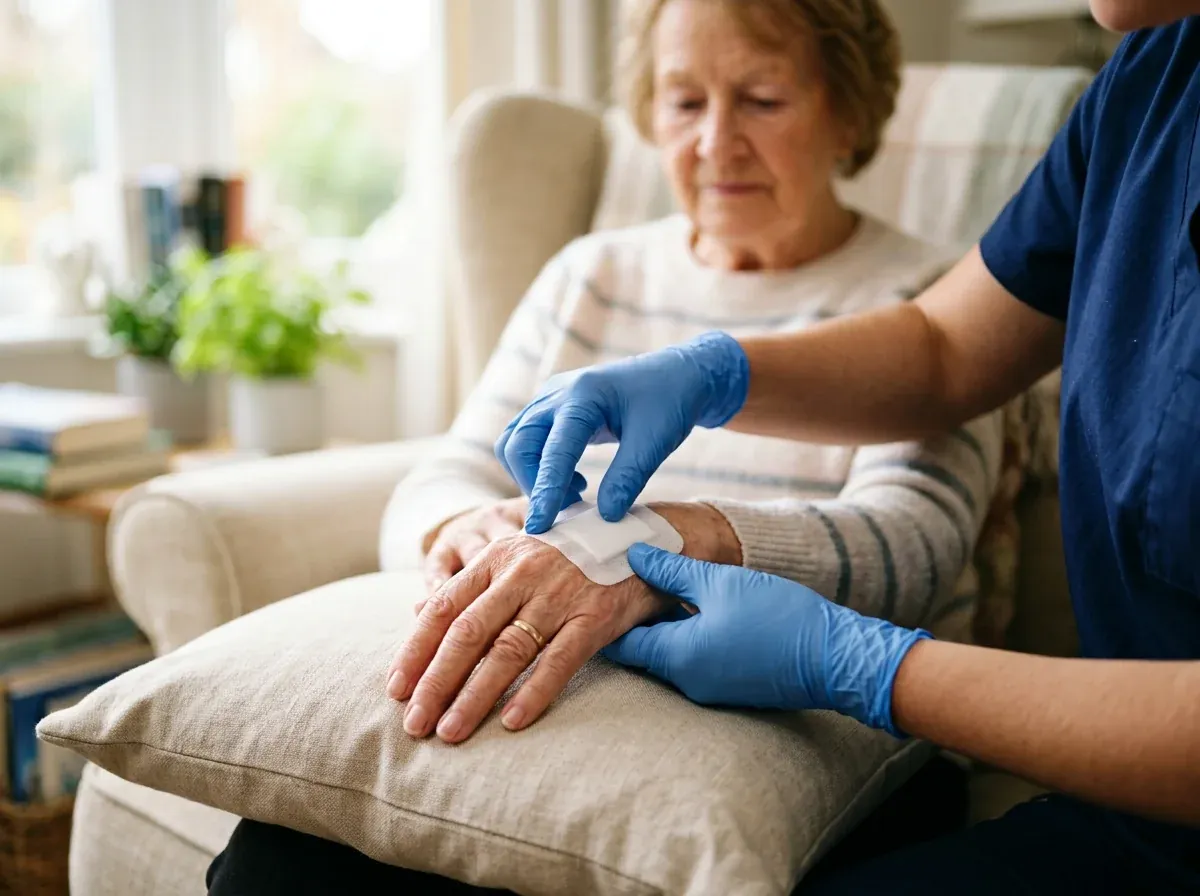
- Apply the new dressingOpen the package without touching the part of the dressing that will contact the wound. Center it over the wound so it covers the wound fully with some margin on every side. Smooth the edges down gently, without stretching.
- Secure it comfortablyIf needed, use tape or a wrap to hold the dressing in place. It should be snug enough to stay put but never tight enough to cause numbness, tingling, coldness or color changes below the wound.
- Clean up and wash your handsRemove your gloves, add them to the sealed bag, dispose of it in your regular trash (unless told otherwise), and wash your hands once more.
- Write down what you sawJot down the date, time and anything you noticed about the wound. A simple log makes it easy to spot changes and gives your clinician useful information.
Common Types of Wound Dressings
You don’t need to choose a dressing yourself (your clinician will do that), but it helps to understand what you’re using and why.
| Dressing type | What it’s like | Often used for |
|---|---|---|
| Gauze | Woven or non-woven cotton pads | Covering, packing or cleaning; often used with other products |
| Foam | Soft, cushioned and absorbent | Wounds with moderate to heavy drainage; pressure areas |
| Hydrocolloid | Thick, gel-forming adhesive pad | Shallow wounds with light drainage |
| Transparent film | Thin, clear and waterproof | Protecting shallow wounds or holding other dressings in place |
| Alginate | Soft fibers made from seaweed that turn to gel | Heavily draining wounds |
| Hydrogel | Water-based gel or gel-soaked pad | Dry wounds that need added moisture |
| Silicone | Gentle adhesive that lifts off easily | Fragile or sensitive skin, especially in older adults |
| Antimicrobial | Contains silver, honey or other agents | Wounds at risk of, or showing signs of, infection |
How Often Should a Wound Dressing Be Changed?
There’s no single answer. It depends on the wound and the type of dressing. Some dressings need changing daily, while advanced foam or hydrocolloid dressings may stay in place for several days. Changing a dressing too often can disturb healing tissue and let the wound cool down. Changing it too rarely can allow drainage to build up and irritate the skin.
- It becomes wet, dirty or soaked through with drainage
- It starts peeling off or no longer covers the wound fully
- Drainage is leaking out of the edges
- It has been contaminated by urine, stool or water
Common Mistakes to Avoid
- Skipping hand washing or reusing gloves between removing the old dressing and applying the new one.
- Ripping off a stuck dressing. Always moisten it first.
- Using cotton balls to clean a wound. They can leave fibers behind.
- Applying hydrogen peroxide, alcohol or iodine without instruction. These can damage healthy new tissue.
- Touching the inside of a new dressing or laying it on an unclean surface.
- Wrapping too tightly. This can cut off circulation.
- Reusing dressings or cutting ones that aren’t designed to be cut.
- Letting the wound “air out” for long periods unless your clinician has recommended it.
Talk your loved one through each step, work slowly and pause if they need a break. Warm the saline to room temperature first; cold solution can be uncomfortable. And don’t hesitate to ask your clinician to demonstrate the dressing change during a visit. Most patients and families feel far more confident after watching it done once.
When to Call Your Wound Care Team
Every dressing change is a chance to check on healing. Contact your clinician the same day if you notice:
- Redness, warmth or swelling that is spreading
- Pain that is getting worse instead of better
- Thick, cloudy, green or foul-smelling drainage
- A wound that is getting larger or deeper
- New black, gray or dark areas in or around the wound
- Fever or chills
- Skin around the wound that looks white, soggy or broken down
For a full breakdown of warning signs, read our guide on the signs of wound infection. If you notice red streaks spreading from the wound, confusion, a racing heart or trouble breathing, call 911.
If managing dressings at home feels overwhelming, you don’t have to do it alone. Our clinicians provide in-home wound care across Troy and Metro Detroit, performing dressing changes, monitoring healing and teaching patients and families exactly what to do between visits.
Frequently Asked Questions
Should I let my wound air out or keep it covered?
For most wounds, keeping them covered with an appropriate dressing is best. Wounds generally heal faster in a moist, protected environment than when left to dry out and scab. Only leave a wound uncovered if your clinician has told you to.
What should I clean my wound with?
Sterile saline is the most commonly recommended cleanser because it’s gentle and doesn’t damage healing tissue. Some clinicians recommend a specific wound cleanser. Avoid hydrogen peroxide, rubbing alcohol and iodine unless your care team specifically advises them.
Can I shower with a wound dressing on?
It depends on your wound and dressing. Some dressings are waterproof and can be worn in the shower, while others must be kept completely dry. Ask your clinician, and if the dressing gets wet when it shouldn’t, change it promptly afterward.
How do I remove a dressing that’s stuck to the wound?
Don’t pull it off. Soak the dressing with a little sterile saline and wait a few minutes for it to loosen, then peel it back slowly and gently while supporting the skin. If dressings stick repeatedly, let your clinician know, since a non-stick or silicone dressing may be a better option.
Is some bleeding normal when changing a dressing?
A few spots of blood can happen, especially when healthy new tissue is disturbed. Apply gentle pressure with clean gauze. If bleeding is heavy, doesn’t stop within about 10 minutes of pressure, or you take blood thinners and are concerned, contact your care team or seek urgent care.
Can a family member change my dressing?
Yes. Many family caregivers learn to change dressings safely. Ask your clinician to show you the technique and watch you do it once. Mobile wound care teams can also visit regularly to handle more complex dressings and check on healing.
What if I run out of the prescribed dressing?
Contact your wound care provider for guidance before substituting another product. A different dressing may not manage moisture or drainage the same way. In the short term, a clean, dry sterile gauze pad is usually a safe temporary cover until you can get the right supplies.
Related Articles
 7 Signs Your Wound Is Infected (and When to Call for Help)
 How to Prevent Bedsores in a Bedbound Loved One
 What Is Mobile Wound Care?
Medical disclaimer: This article is for general educational purposes only and is not a substitute for professional medical advice, diagnosis or treatment. Always follow the instructions of your own healthcare provider. If you think you are experiencing a medical emergency, call 911 immediately.